
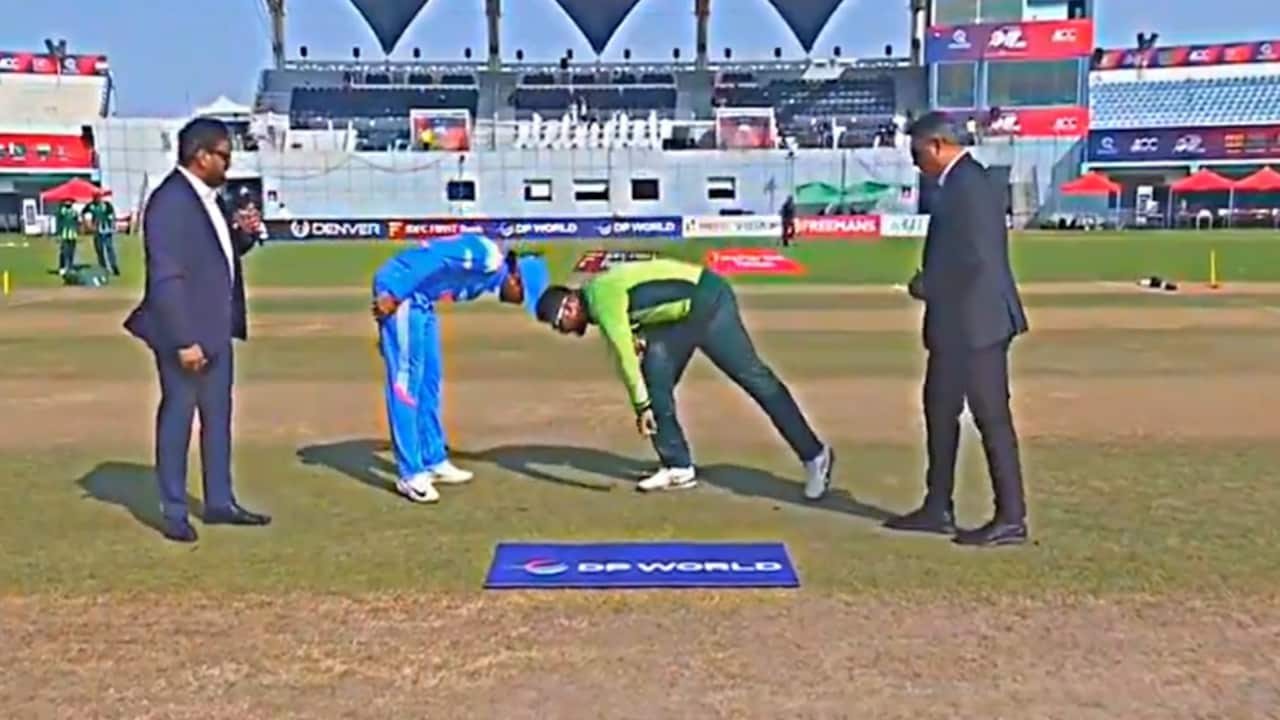
The India–Pakistan handshake controversy has prompted a clear distinction from the Marylebone Cricket Club: protecting respect on the field does not mean it can control every decision surrounding a match. Fraser Stewart, MCC’s Laws Manager and Head of Cricket, said the club would like players to exchange handshakes but cannot override instructions coming from beyond the game.
Stewart’s comments, reported by Cricbuzz, followed the India A–Pakistan A Rising Stars Asia Cup meeting in Doha. The absence of the customary greeting again put the discussion around cricket’s spirit alongside the result of the match.
Respect remains the cricketing priority
Stewart’s position was that players should respect opponents, umpires and the authority of the game. He separated those responsibilities from geopolitical decisions that are outside his remit.
That distinction is central to his response. Wanting to see a customary sporting gesture does not give MCC the authority to decide wider policy for teams or their governing bodies. Stewart acknowledged the club’s preference without presenting it as an instruction that it could enforce in these circumstances.
A boundary around the handshake debate
The issue has followed meetings between Indian and Pakistani teams since the Asia Cup in Dubai. The latest match renewed attention on the greetings before and after play, but Stewart did not claim MCC could settle the larger disagreement.
His response instead placed the emphasis on conduct during cricket itself. Respect for opponents and umpires remains the standard he wants the sport to maintain, even where decisions around customary exchanges are being made at another level.
Sandpaper and the Laws are a different question
Stewart also distinguished that debate from the use of sandpaper on a cricket ball. He described sandpaper use as a breach of the Laws, while declining to decide between the competing accounts now circulating about the Australian controversy.
He said the truth behind those claims was a matter for Cricket Australia and others to investigate. The position leaves a clear separation: MCC can explain what the Laws prohibit, but that does not make it the body that establishes every disputed account of who knew what. On both subjects, Stewart kept the focus on the limits of MCC’s authority.

What’s your take?आपकी क्या राय है?
Keep it about cricket. Be respectful and avoid sharing personal information.बात क्रिकेट की रखें। सम्मान से अपनी राय दें और निजी जानकारी साझा न करें।
Loading comments…कमेंट लोड हो रहे हैं…