
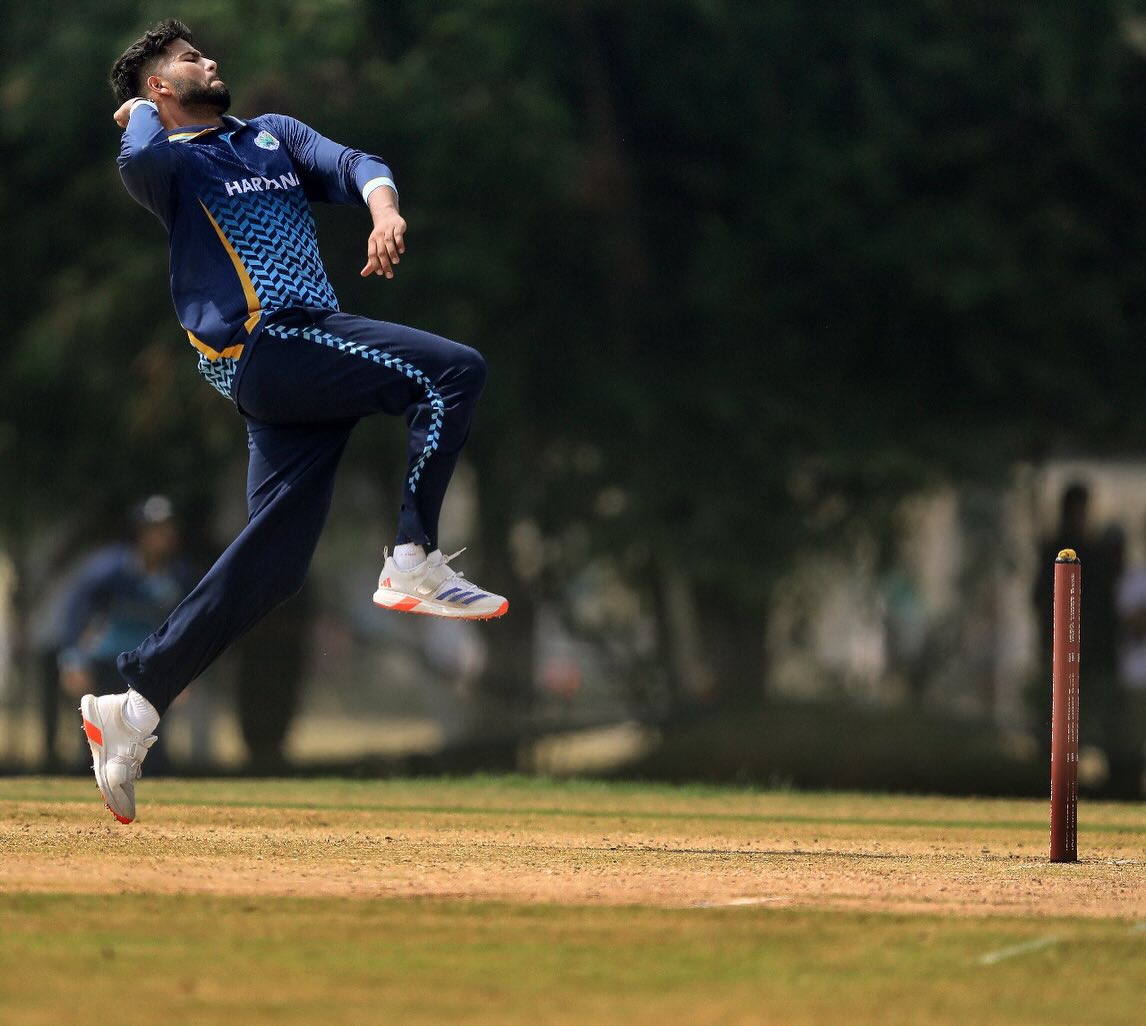
Sixty from 22 balls, eight sixes and then two wickets for 16. Haryana's game against Hyderabad in the last Syed Mushtaq Ali Trophy offers a compelling introduction to Samant Jakhar. He helped accelerate his team's innings and then contributed with the ball in the same match. For an IPL team seeking Indian power down the order, that combination deserves attention.
His batting is the starting point. Jakhar can hit long sixes, particularly down the ground, and a clean connection sends the ball away quickly. His seam bowling adds another reason to look: changes of pace, a deceptive slower ball and the potential to interrupt an innings rather than simply fill an over.
Eight sixes and a partnership that changed the size of the total
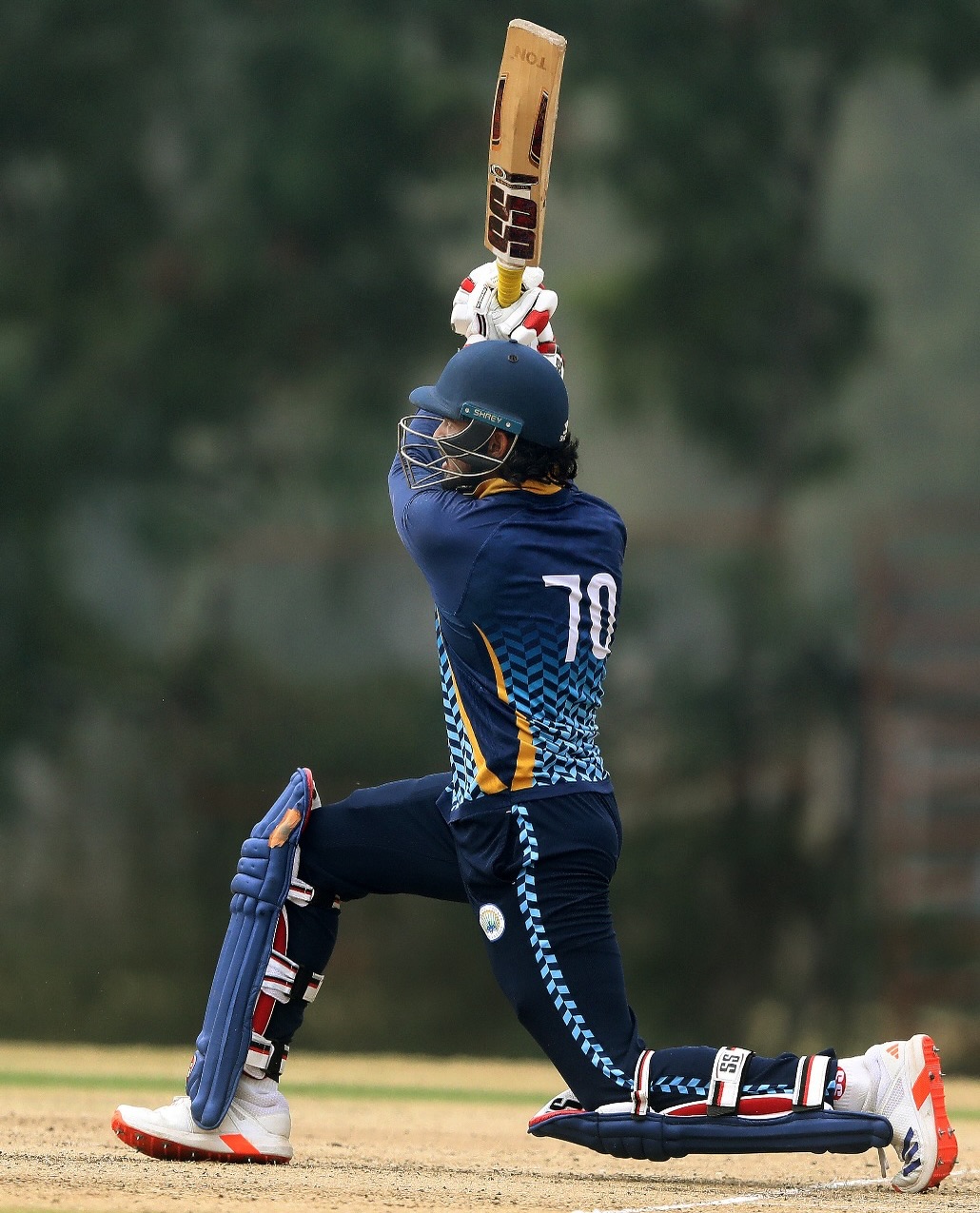
Against Hyderabad on 16 December 2025, Jakhar batted at No. 6 and made 60 from 22 deliveries. His one four and eight sixes brought a strike rate of 272.73, with 48 runs coming from sixes alone. Haryana finished on 246/7.
The innings had reached 135/5 after 13.2 overs. From there, Jakhar and Parth Vats added 81 in 32 legal deliveries for the sixth wicket. By the time Jakhar was dismissed, the score had become 216 after 18.4 overs. That partnership helped turn the platform provided by the earlier batters into a much larger final total.
This is a demanding role. A lower-order batter does not always have ten deliveries to find his rhythm. He may need to judge a bowler quickly and attack almost immediately. Jakhar's ability to clear the ropes gives him a way to respond to that demand. He can generate power through his swing and make a clean strike count, without needing every scoring opportunity to be a perfectly placed gap.
The wider season supports the appeal. In eight batting innings during SMAT 2025-26, he scored 198 runs at a strike rate of 178.38 and hit 20 sixes. A lower-order player's aggregate needs to be read alongside his opportunities. How quickly he scores in the deliveries available to him can matter as much as the size of the total beside his name.
A second skill that can change a captain's options
Jakhar's variations give his bowling a purpose. A batter preparing to hit hard relies on the ball arriving at the expected pace. A well-disguised slower delivery can upset that timing. Coupled with changes in length, it gives a medium-pacer a way to challenge a batter who has settled.
That matters particularly through the middle of a T20 innings. Once a partnership is moving quickly, containment alone may not be enough. A wicket can force the opposition to rebuild with a new batter and stop an innings gathering uninterrupted momentum. Jakhar offers a captain a potential route to that breakthrough.
The Punjab game in November 2025 provides a concrete example. Chasing 208, Punjab had recovered from 28/2, with Anmolpreet Singh making 81 from 37 balls. Jakhar took his wicket and finished his four regular overs with 2/37. The game was tied before Haryana won the Super Over, which Anshul Kamboj bowled. Jakhar's contribution came earlier, when removing an established batter mattered.
Against Puducherry, he returned 3/24 from four overs in an opposition total of 201/9. Haryana lost that match by five runs, but his economy of six an over stood out within a much faster-scoring innings. Those are meaningful overs from a player whose batting also gives him a case for selection.
The Hyderabad performance brought both skills together: after the 60, he took 2/16 from three overs and was named Player of the Match. His 14 wickets across the completed SMAT season show that his bowling contribution went beyond an occasional appearance.
Jhajjar and the foundations of his cricket
Born on 28 January 2004, Jakhar is 22 as this article is prepared. His progression from Jhajjar has included Haryana's age-group cricket before the senior opportunities that brought wider attention.
The Nehru College Cricket Stadium sports nursery in Jhajjar forms part of that development story. Jakhar is among the players associated with the nursery, where coach Naveen Saini has guided young cricketers. It is an important link between local training and the competitive state pathway; his recent SMAT performances are a visible stage in a longer progression.
His father, Devender Jakhar, expressed happiness when his son made his Ranji Trophy debut. He also assessed the batting contribution in the context of Jakhar's position in the order. That is a useful way to understand a developing lower-order player. A short innings may be exactly what the team needs, even when its value is not immediately obvious from the aggregate.
The ability to stay in an innings, as well as accelerate it
The age-group trail gives substance to that progression. Against Delhi in the 2019-20 Vijay Merchant Trophy, Jakhar scored 37 and 42, the second innings taking only 39 deliveries. In a 2022 Cooch Behar Trophy game against Vidarbha, he contributed 65 and two wickets. His involvement with both bat and ball predates the senior T20 performances.
A particularly useful innings came against Bihar in the Colonel CK Nayudu Trophy in November 2024. Haryana had been 96/5. Jakhar made 115 and shared a 186-run seventh-wicket stand with Parth Vats. The situation required rebuilding and sustained batting, rather than a quick burst alone.
In December 2024, against Delhi Under-23s, he made 49 from 42 balls, with three fours and three sixes, as Haryana chased 313 in 37.2 overs. Together, these innings show different ways of contributing: recovering from trouble, maintaining a chase and accelerating towards the end of a T20 innings.
Why the Impact Player era still leaves a case for him
The Impact Player provision gives teams the flexibility to use an additional specialist. For a young allrounder, that makes the strength of his leading skill especially important. With Jakhar, there is a batting argument: a lower-order Indian option who can clear the ropes and score quickly in a limited number of balls.
His seam bowling can then expand the team's choices. It might mean one or two useful overs, a wicket when a partnership threatens to take control, or a larger workload when the conditions and matchups favour him. A captain does not have to use him in exactly the same way every day.
At 22, he also offers a franchise time to work with both skills. A clear batting role, continued development of his variations and meaningful opportunities could help turn an immediate backup option into a longer-term Indian resource.
The recommendation is straightforward. IPL teams looking for Indian lower-order power with useful seam overs should take Jakhar seriously. The six-hitting gives him a route into the conversation; the ability to contribute with the ball makes that conversation more interesting.



What’s your take?आपकी क्या राय है?
Keep it about cricket. Be respectful and avoid sharing personal information.बात क्रिकेट की रखें। सम्मान से अपनी राय दें और निजी जानकारी साझा न करें।
Loading comments…कमेंट लोड हो रहे हैं…